
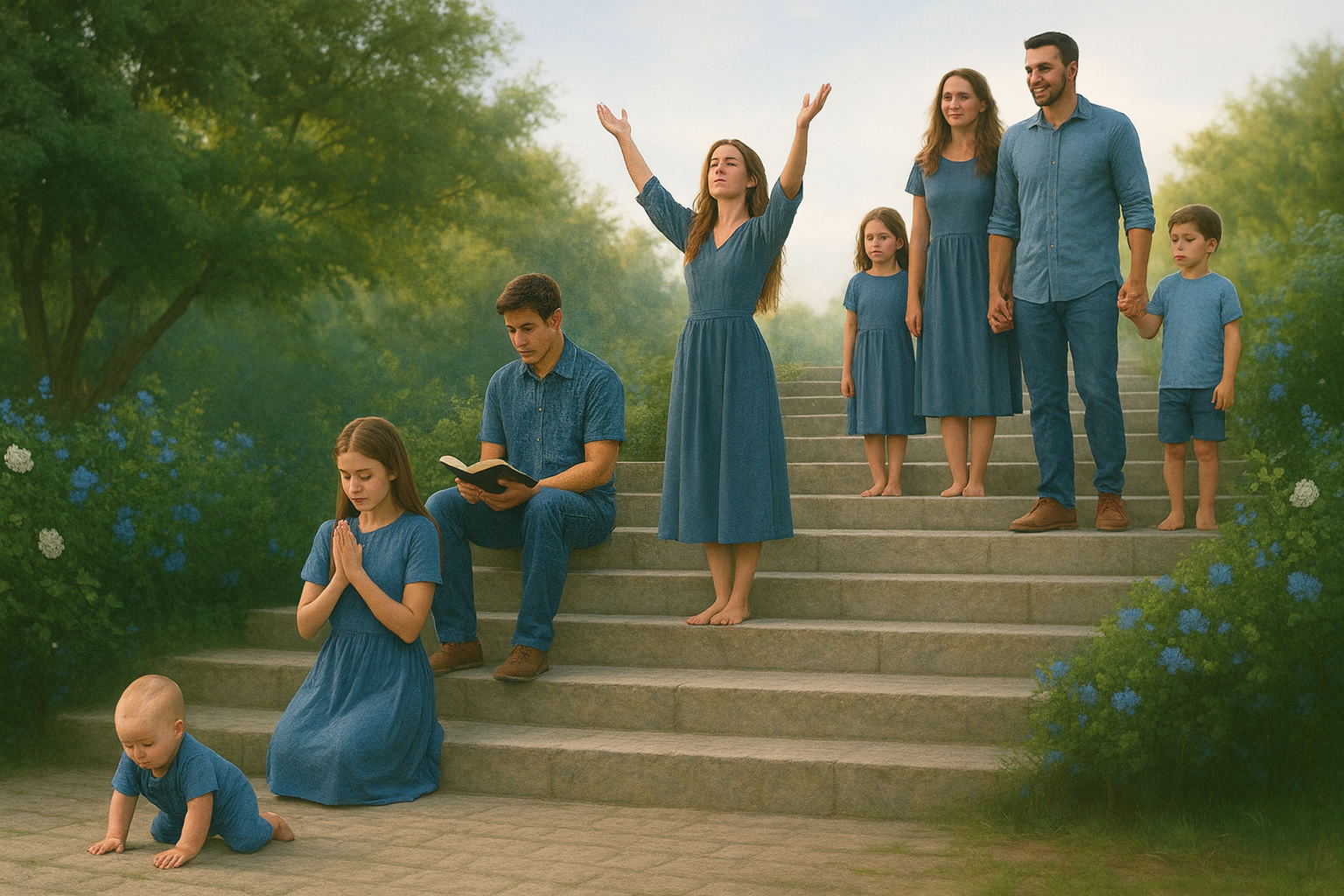
“Therefore go and make disciples of all nations, baptizing them in the name of the Father and of the Son and of the Holy Spirit, and teaching them to obey everything I have commanded you. And surely I am with you always, to the very end of the age.” – Matthew 28:19–20
In the previous study, Disciples Are Witnesses to the Gospel, we learned that every follower of Jesus is called to testify to what God has done in their lives. But witnessing is only the beginning. While evangelism is essential, Jesus never commanded His followers to make converts; He commanded them to make disciples.
In the original Greek, there is only a single command in Matthew 28:19-20 – ”make disciples.” The other phrases, “go,” “baptize,” and “teach” all describe how we are to carry out this charge. This is the heart of the Great Commission. Jesus’ desire is not simply to bring people into saving faith but to shape them into His likeness so they can walk faithfully with Him and pass their faith onto others.
Discipleship is not a program, a class, or a church event. It is life shared with others, walking with them as Jesus walked with His followers. Helping them learn the truth, obey His commands, and to live their lives as a child of God. It is similar to training a child to become an adult. In fact, we might consider a “true disciple” of Jesus as being an “adult Christian.” Someone who is able to take responsibility for their own spiritual health and continued growth.
Go into All Nations
As we read in the last study, Jesus’ final command to His disciples was: “But you will receive power when the Holy Spirit comes on you; and you will be My witnesses in Jerusalem, and in all Judea and Samaria, and to the ends of the earth.” (Acts 1:8). The truth of the Gospel was meant to spread throughout the world. But the job is still not complete.
Every disciple begins in their “Jerusalem,” with the people closest to them: family, friends, neighbors, and coworkers. From there, their influence stretches outward into their community, workplace, city, culture, and beyond.
Jesus also deliberately included Samaria. The Jews despised the Samaritans, so Jesus was showing that the Gospel breaks through barriers of prejudice, fear, and discomfort. The mission of Jesus always moves outward, toward people unlike us, toward those who have never heard, toward the nations of the world.
The disciple’s task is not to stay where they are comfortable but to follow Jesus wherever He sends us. The world will not be transformed by silent Christians, but by those who take Christ’s message of hope into every space God opens to them.
Baptizing: Identifying with Christ
Jesus also instructed His disciples to baptize new believers “in the name of the Father and of the Son and of the Holy Spirit.” In the early church, baptism immediately followed belief. New believers who trusted in Christ were baptized, declaring that they now belonged to Him. The act itself was bold, often identifying believers to those who would persecute them. Yet this was the point: baptism was a confession of allegiance to Jesus as Lord.
Baptism does not save us, as salvation comes solely through our faith in Jesus Christ. It is a gift from God through grace to those who believe. However, baptism is still important, because it is an outward expression of an inward transformation.
Today, baptism remains an essential step of obedience. It does not add to salvation but affirms it. When we step into those waters, we are proclaiming that Jesus is our Savior, our Master, and our King. Every disciple should joyfully embrace this command, knowing that in obeying it, we identify ourselves fully with Christ and His people.
Teaching: Helping Others Obey
Another important aspect of making disciples is to teach new believers “to obey everything I have commanded.” Notice that He didn’t say “teach them what I commanded,” but “teach them to obey.” Discipleship is not only about communicating information but developing transformation.
Teaching obedience is more than words; it also requires our example of how to follow Jesus. Jesus taught His disciples by walking with them, showing them how to forgive, serve, and pray. Likewise, we instruct others best when our lives mirror the truths we share. The classroom of discipleship is daily life, conversations, challenges, and choices where faith is lived out.
This command reminds us that discipleship never ends. Even mature believers are still learning to obey. As we teach others, we continue to grow ourselves. The process of disciple-making keeps us dependent on God’s Word and Spirit, shaping us even as we help shape others.
The Spiritual Growth of a Disciple
Every disciple begins as a spiritual newborn. When a person first comes to Christ, they need help from other believers who supply nourishment, guidance, and encouragement. Over time they grow in understanding, obedience, Scripture reading, prayer, resisting temptation and learning to walk in faith. Eventually, a disciple matures into someone who can take responsibility for their own spiritual health, someone who is not dependent on others for every decision but can feed themselves, discern truth, and follow Christ faithfully.
But the process does not end there. A true disciple ultimately becomes one who invests in the growth of others. Like Paul mentored Titus and Timothy (among others). He trained them to step out and make their own disciples, who would ultimately disciple others. (2 Timothy 2:2), They took what they have received and passed it on. This is the vision He gave for the growth of His Church.
This is the natural progression Scripture envisions: new believer → growing believer → mature disciple → disciple-maker. In this way, the mission of Christ continues from generation to generation. Discipleship is never meant to stop with us; it is meant to flow through us.
What this Means for a Disciple Today
To every believer today, the Great Commission still stands as the heartbeat of discipleship. To follow Jesus is to join Him in His mission. Each of us is called to go into our circles of relationships to make disciples. The mission may look different for each person, but the purpose is the same: to multiply followers of Christ who live by His Word and reflect His love.
This mission also reminds us that Christianity is not passive. The gospel is meant to move, to be shared, lived, and passed on. When we live as witnesses, when we obey through baptism, and when we teach others to walk in faith, we participate in the same story Jesus began on that Galilean hillside.
And in case we feel inadequate, Jesus ends this command with a promise: “I am with you always, to the very end of the age.” The One who sends walks beside us. His presence empowers every conversation, every act of service, and every step of obedience.
Making disciples is not just church work, it is Kingdom work. It’s the calling of every believer who has experienced the grace of God and desires to see others do the same. When we make disciples, we are continuing the ministry of Jesus Himself.
This concludes the Foundations of Discipleship series. In the series we began with a call of Jesus for us to become a disciple and logically concludes with Jesus’s command to go and make disciples. From counting the cost to trusting His promises, from enduring hardship to living with eternal hope, every study in this series has pointed to one clear truth: following Jesus changes everything. That journey finds its outward expression in making disciples, passing on what we have received so others may walk with Christ as well. Discipleship was never meant to end with us. The call before us is simple but demanding: to continue walking faithfully with Jesus and to invest our lives in helping others do the same.
Questions for Reflection and Discussion
In what ways does Jesus’ command to “make disciples” challenge the idea that Christianity is only a private, personal faith? Where do you see the difference between making converts and making disciples?
Who played a significant role in helping you grow spiritually when you first came to Christ? How does their involvement shape how you view disciple-making today?
Jesus calls us to “go” into our Jerusalem, Judea, Samaria, and the ends of the earth. What is one step you can take to be more intentional in your own “Jerusalem” this week?
Baptism is a public declaration of belonging to Jesus. How does this act of obedience strengthen both the believer and the church? Have you personally experienced this?
Jesus says to teach others to obey – not just to learn. What helps you personally move truth from your mind into obedience in your daily life?
Where would you place yourself on the spiritual growth pathway—new believer, growing believer, mature disciple, or disciple-maker? What is one step that would help you grow into the next stage?
Jesus ends the Great Commission with the promise, “I am with you always.” How does His presence encourage you as you seek to invest in the lives of others and help them follow Him?









 My name is Michael Adkins. For several decades I’ve been studying Scripture, developing discipleship resources, and teaching others how to walk more closely with Christ. Currently, I serve as the Discipleship Pathway Leader at Riverside International Church in Cascais, Portugal, where my passion is helping believers grow into mature disciples who live out their faith in everyday life.